Make safe first, price after
Sheeted, secured, water stopped. The conversation about cost happens once the ingress has stopped, not while it is running down your wall.
After a bad night the priority is stopping water getting in, not agreeing a price. We make it safe, we photograph everything for your insurer, and we quote the permanent repair once it is dry.
Storm work runs in a different order from everything else we do. Normally we survey, we quote, you decide, we book it in. After a storm that sequence is useless, because water is coming in now. So we invert it: make it safe, sheet it up, stop the ingress, then talk about what the permanent repair costs once everyone can think straight.
What comes off first is predictable. Ridge tiles and mortar verges go before anything else, because they are the edges and the wind gets under them — which is why we get more calls from the exposed Tamworth estates than from the sheltered streets in Boldmere after the same weather. Then it is dry-fix ridges that were never mechanically fixed properly, lead flashings that lift, and whole rows of edge tiles once a verge has let go and given the wind a handle.
The insurance side is where people get caught, so we do it properly. We photograph the damage before we touch anything, we date it, we describe the cause in language a loss adjuster recognises, and we itemise the emergency make-safe separately from the permanent repair. Insurers pay for storm damage. They generally do not pay for gradual deterioration, and if your ridge had been loose for four years the adjuster will say so. We will not write you a letter claiming otherwise. We will tell you honestly what we think the claim looks like.
One thing worth saying plainly: we are not a 24-hour emergency outfit and we are not going to pretend to be. There are five of us and we go home at night. After a big storm we prioritise by how much water is getting in, we ring you back with a real time rather than a hopeful one, and if we cannot get to you today we will say today, not string you along.
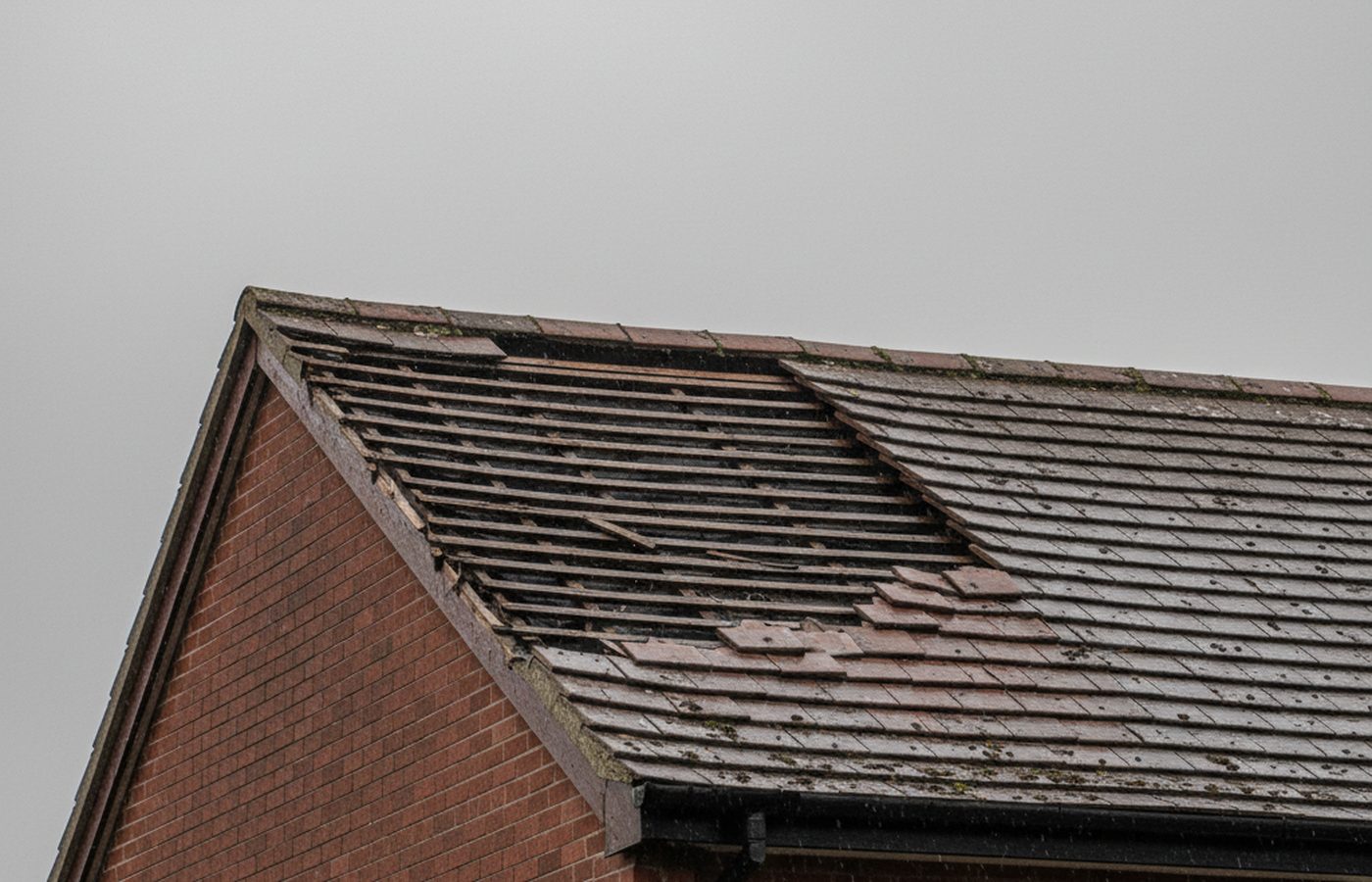
Sheeted, secured, water stopped. The conversation about cost happens once the ingress has stopped, not while it is running down your wall.
Dated images before we touch anything, cause described in the language a loss adjuster expects, make-safe itemised separately from the repair.
Insurers pay for storm damage, not for four years of neglect. We will tell you which one you have got rather than write a letter we do not believe.
Five of us, and we sleep. After a big blow we prioritise by water coming in and we give you a real time, not a hopeful one.
The questions we get most on this job. The full list is on our FAQ page.
Storm damage, usually yes. Gradual deterioration that a storm finished off, usually no. The distinction is the whole argument, and we will give you our honest read before you claim.
Sometimes. It depends how many people rang before you and how much water is coming in. We will give you a real answer on the phone rather than a comfortable one.
Most policies want wind speeds around 47–55mph or above. The Met Office holds the record for your date and postcode, and insurers check it. So do we, before you claim.
Not to make it safe — every policy expects you to prevent further damage. Do not have the permanent repair done before they have seen it, though, unless they have said so in writing.
We have written these up properly, town by town, because the housing stock genuinely differs. Four Oaks is not Walmley.