Lead, not a cement smear
Soakers and stepped flashing, chased in and wedged. A cement fillet on a chimney is a repair with an expiry date and we will not fit one.
Roofs do not leak in the middle. They leak where one thing meets another thing, and the craft of making those joints last is leadwork. It is the part of this trade we are proudest of.
A tile sheds water. A joint has to be made to shed water, and the material we make joints with is lead — because it moves with temperature, it dresses to any shape, and it lasts the better part of a century when it is cut to the right code and lapped properly. Almost every leak we chase in Boldmere and the Sutton terraces ends up at a joint: a chimney stack, an abutment, a valley, or a bay roof.
The enemy is the cement fillet. Somewhere along the line it became normal to seal a chimney to a roof with a triangular smear of sand and cement instead of lead soakers and stepped flashing chased into the mortar joints. Cement and brick expand at different rates, so it cracks. Once it cracks it holds water against the stack rather than shedding it. Then someone smears more cement over the crack. We take a lot of those off and do it properly — individual soakers between each course of tiles, a stepped flashing let into the brickwork, wedged and pointed, and a proper back gutter behind the stack.
On the brickwork itself, the questions are repointing, rebuilding above the roofline, or removing the stack entirely. A stack takes weather from every side and it is the most exposed masonry on your house, so it degrades faster than the walls below. Where it is only pointing, we repoint in a mix appropriate to the brick — a hard modern cement mortar on soft Victorian brick will destroy the brick faces over a couple of decades, which is a favour nobody needed. Where the stack is genuinely gone above the roofline, we rebuild it, reusing the original brick where it is sound.
Shared stacks on the Boldmere and Sutton terraces need one extra conversation, which is with next door. The stack sits on the party wall and the work affects both houses. We are happy to talk to your neighbour and we would rather do that at the start than halfway up a scaffold.
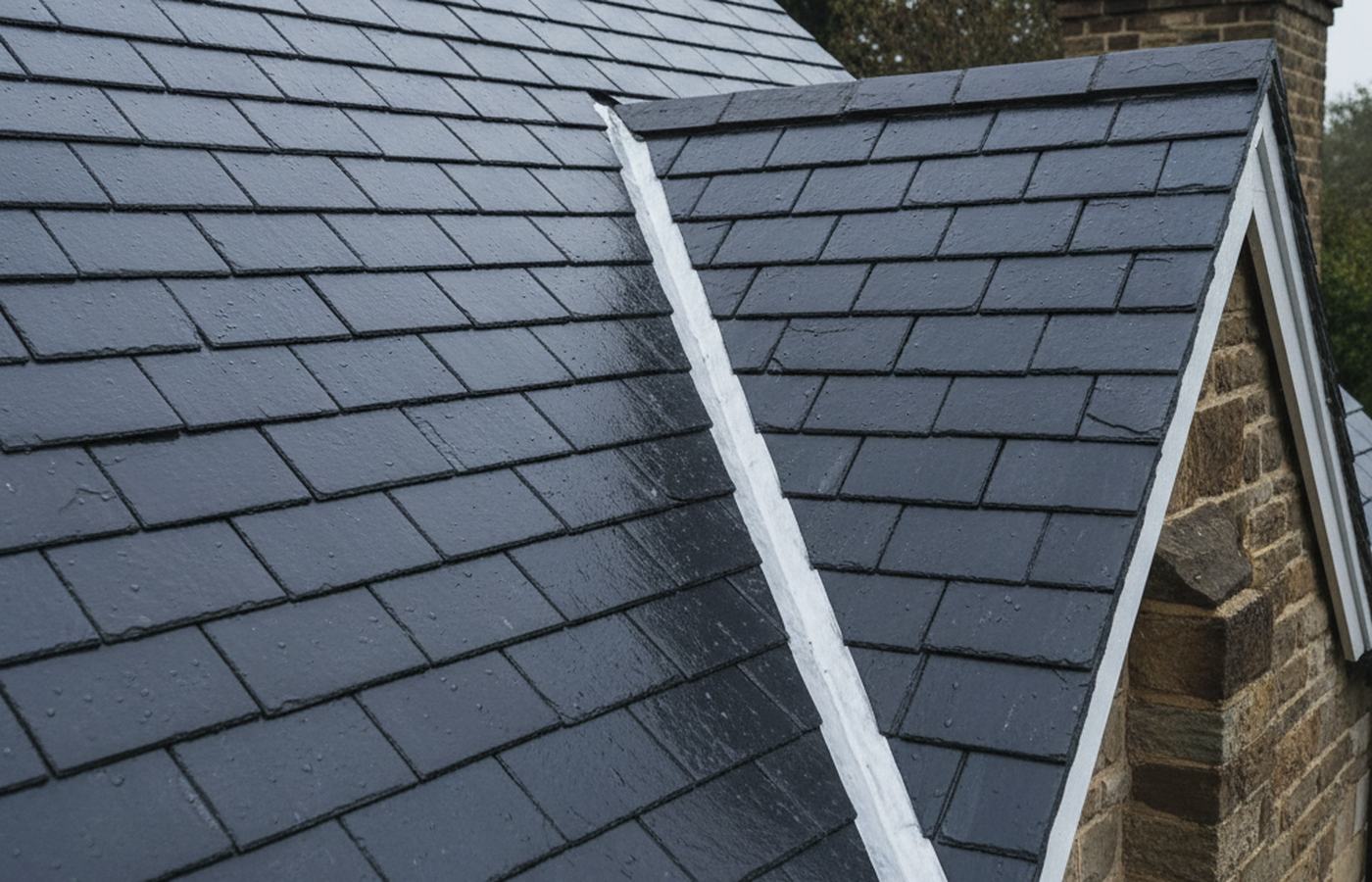
Soakers and stepped flashing, chased in and wedged. A cement fillet on a chimney is a repair with an expiry date and we will not fit one.
Hard cement pointing on soft Victorian brick wrecks the brick faces. We mix for the building in front of us, not for the bag that was in the van.
Shared stacks on a terrace affect two houses. That conversation happens before the scaffold goes up, not during.
If the stack is redundant and gone, taking it down and roofing over is sometimes the right answer. We will tell you when it is.
The questions we get most on this job. The full list is on our FAQ page.
It is not how it should be done. It works until it cracks, and it always cracks, because cement and brick move at different rates. Proper leadwork is the fix.
If it is still serving a working fire or a flue, repair. If it is redundant, capped and crumbling, removal and roofing over is often cheaper and permanently ends the maintenance.
Code 4 for most soakers and flashings, code 5 where there is more movement or exposure, such as a big valley or an exposed stack. Under-specifying the code is how lead splits early.
Usually shared, and it depends on your deeds. Practically, the work has to happen on both sides at once. We will help you both have that conversation.
We have written these up properly, town by town, because the housing stock genuinely differs. Four Oaks is not Walmley.